On this page
I wasn’t planning to get hooked on another gacha game. Between testing hardware and keeping up with Jack’s growing interest in gaming, my free time is pretty limited. But when Arknights Endfield launched in January 2026, the combination of open-world exploration and factory building caught my attention. I figured I’d play for a few hours, write some performance notes, and move on.
Sixty hours later, I’m still building conveyor belts at 1 AM while Emily gives me that look.
So is Endfield actually worth your time, or is it just another pretty gacha game trying to empty your wallet? I’m going to break down exactly what makes this game work, what frustrates me, and who should download it. No marketing fluff, just my honest experience.
Ready to start playing?
What is Arknights Endfield?
Endfield is a free-to-play action RPG from Hypergryph, the developers behind the original Arknights. But don’t let that connection confuse you. This isn’t a tower defense game. It’s a fully 3D open-world experience with real-time combat and surprisingly deep factory automation mechanics.
You play as the Endministrator, leader of Endfield Industries, exploring a moon called Talos-II. Your job is to gather resources, build automated production lines, and fight enemies called Aggeloi that threaten the local settlements. The story involves amnesia because of course it does, but it picks up after the slow opening hours.
The game launched on PC, PS5, iOS, and Android with full cross-platform progression. I’ve been playing primarily on PC, but I’ve tested the mobile version on my phone during lunch breaks. Both run well, though the factory building is easier with mouse and keyboard. For a complete breakdown of every system, check our full Endfield guide.
Combat: Fun at first, repetitive later
Combat operates with a four-character squad that fights simultaneously. You directly control one Operator at a time but can switch between them freely. Landing combos fills a stagger meter on enemies, and staggered targets take massive damage from follow-up attacks.
The chain attack system is the highlight. When you finish a combo or use certain abilities, you can trigger attacks from your other party members. Watching your squad flow between abilities, chaining elemental effects and coordinated strikes, feels satisfying. The first twenty hours of combat genuinely impressed me.
Here’s my issue though. After those twenty hours, I started noticing the cracks. Enemy variety is limited. You’ll fight the same handful of enemy types repeatedly with minor variations. Boss fights demand more attention to attack patterns, but regular combat becomes autopilot once you’ve built a decent team.
The dodge mechanic also feels clunky. Perfect dodges generate extra skill points and look cool, but the timing window is inconsistent. Sometimes I nail dodges that seemed late. Other times I get hit by attacks I swear I avoided. It’s functional but not as tight as dedicated action games.
Combat is good enough to carry you through the game. It’s just not good enough to be the reason you play. Our beginner guide covers essential combat tips if you want to get the most out of the system.
Factory building: The unexpected hook
The factory automation completely blindsided me. I expected a throwaway base-building system. What I got was basically Factorio Lite embedded in a gacha game.
You harvest resources from nodes scattered across Talos-II, refine raw materials through processors, route products via conveyor belts, and manage power distribution across your network. Different regions require different setups. You’re constantly optimizing layouts, reducing bottlenecks, and planning expansion routes.
I’ve spent more time perfecting my ore processing lines than actually fighting enemies. That’s not a complaint. The satisfaction of watching an automated system you designed running smoothly hits the same dopamine buttons that make games like Satisfactory so addictive.
The game shares factory blueprints between players through an asynchronous system similar to Death Stranding. If someone builds a particularly clever setup, it might appear in your world. You can also create ziplines and energy relays that other players can use. It’s a nice touch that makes Talos-II feel slightly more alive.
Fair warning: if factory games bore you, this element won’t convert you. But if you’ve ever lost hours to Factorio or Dyson Sphere Program, Endfield might be dangerous for your free time.
The gacha problem
Let’s talk about the elephant in the room. Endfield is a gacha game, and the monetization isn’t subtle.
New Operators come from the headhunting system, which works like most gacha games. You pull using premium currency, hope for rare characters, and deal with the inevitable disappointment when you don’t get what you want. The pity system guarantees a six-star Operator after 120 pulls on the featured banner, which is actually worse than some competitors.
What bugs me more is the duplicate system. Getting the same character multiple times unlocks additional passive abilities. Maxing out a character requires five copies total. For limited characters, that’s either incredible luck or serious spending.
The launch was generous with free pulls. I accumulated around 130 pulls just from pre-registration rewards, events, and exploration rewards in my first two weeks. I pulled two six-star Operators without spending money and built a team that handles all current content comfortably.
But I’m realistic. The generosity will taper off. Future limited characters will require saving or spending. If gacha mechanics frustrate you on principle, Endfield won’t change your mind.
If you’re comfortable treating gacha as a marathon rather than a sprint, the free-to-play experience is solid. The game gives you enough strong free characters to progress without feeling stuck behind paywalls.
Exploration and world design
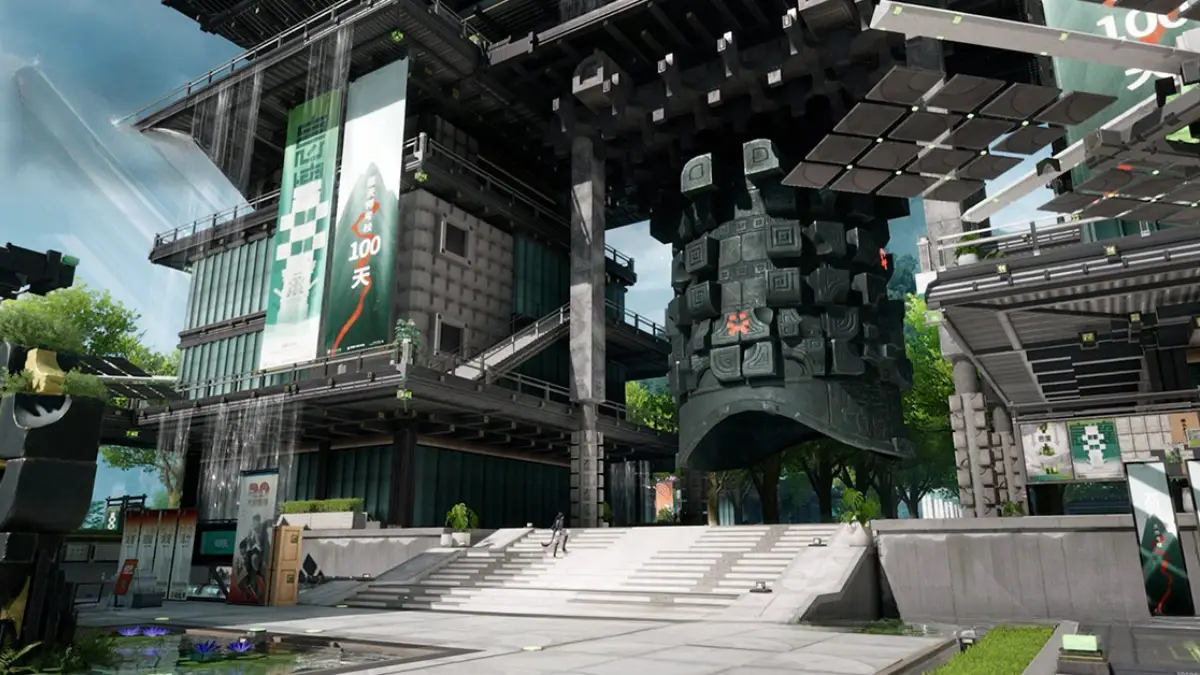
Talos-II is genuinely fun to explore. The environments are gorgeous, mixing industrial structures with alien landscapes. Chest hunting scratches the same itch as early Breath of the Wild, rewarding you for checking every corner and figuring out how to reach awkward ledges.
You only have a single jump and a dash with no air dashing, which forces creative traversal. Some chests require setting up ziplines or finding alternative routes. The exploration rank system rewards thorough exploration with useful materials and currency.
The world isn’t truly open in the way Genshin Impact’s is. Regions unlock progressively as you advance the story, and invisible walls occasionally block paths that look accessible. But within each region, there’s enough freedom to wander and discover.
I’ve found myself taking detours just to see what’s over the next hill. For a free game, the visual quality surprised me.
Story: Slow start, decent payoff
I’ll be honest. The story didn’t grab me immediately. The opening hours dump exposition, introduce forgettable characters, and lean heavily on the amnesia protagonist trope. I skipped dialogue for the first several hours.
Around the fifteen-hour mark, something shifted. The stakes escalated. Character motivations became clearer. The conflict between Endfield Industries and various factions on Talos-II developed genuine tension. I stopped skipping cutscenes.
The English voice acting is serviceable but unremarkable. Some deliveries feel flat. Major story moments hit harder when I switched to Japanese voices with subtitles, though that’s personal preference.
If you’re here for story, give it time. If you don’t care about story at all, the skip button works fine.
Who should play Arknights Endfield?
Download it if you:
- Enjoy exploration-focused games with collectible-hunting
- Have any interest in factory building or automation games
- Want a free-to-play game you can play casually on mobile and PC
- Don’t mind gacha mechanics as long as free-to-play is viable
- Like anime-style character designs
- Want something to play in short sessions during breaks
Skip it if you:
- Need tight, responsive combat as your main focus
- Hate gacha games regardless of implementation
- Have no patience for slow story openings
- Find factory building tedious rather than relaxing
- Want a game you can “complete” rather than play ongoing
Endfield is the better choice for players specifically tired of the Genshin formula or anyone intrigued by the factory mechanics. Check our beginner guide for 15 essential tips before you start.
My verdict after 60 hours
Arknights Endfield isn’t perfect. The combat grows repetitive. The gacha is predatory by design. The story takes too long to find its footing.
But I keep playing. Every night I tell myself I’ll just optimize one production line, and suddenly an hour disappears. The factory building has its hooks in me, and the exploration rewards my completionist tendencies. The character designs are excellent, the world is beautiful, and there’s more content here than most free games offer.
For the price of free, it’s absolutely worth trying. Download it, play through the opening hours, and see if the factory mechanics click for you. If they do, you’ll understand why I’m still awake at 1 AM watching conveyor belts move ore.
If the factory stuff bores you and the combat doesn’t compensate, you’ll know within a few hours and can uninstall without losing anything.
I expected to bounce off this game quickly. Instead, it earned a spot in my regular rotation alongside the hardware testing and the AAA titles I cover. That’s the best endorsement I can give.
Ready to try it? Arknights Endfield is free on PC, PS5, iOS, and Android. Download Arknights Endfield and see if Talos-II hooks you like it hooked me.
Disclosure: Some links in this post are affiliate links. If you make a purchase through these links, RigPod may earn a commission at no additional cost to you. See our Affiliate Disclosure for more information.