On this page
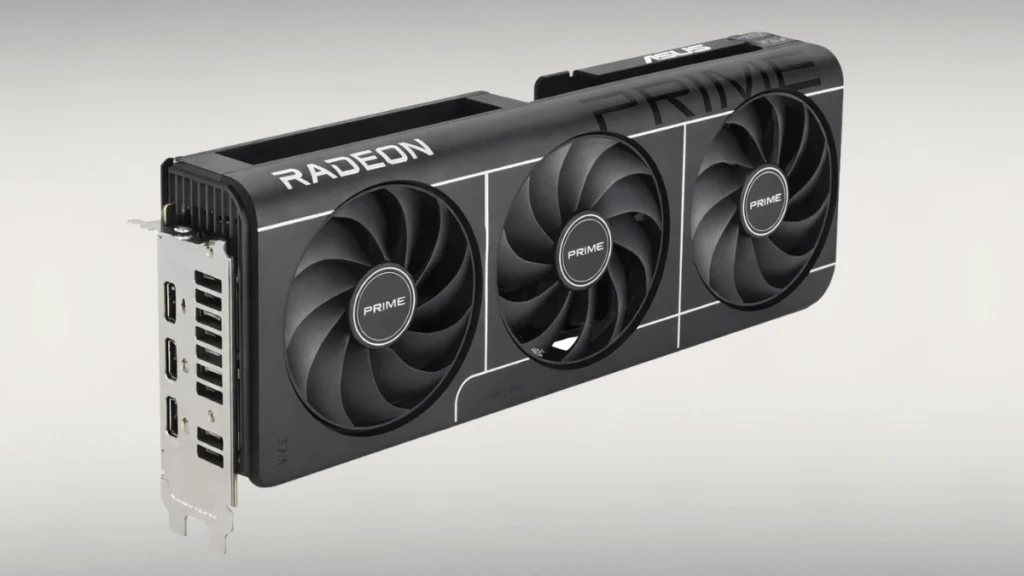
AMD’s Radeon Software has come a long way. Like, genuinely transformed from that clunky Catalyst Control Center nightmare I remember from years ago into something actually useful. I spent a few weeks recently testing every setting that matters on an RX 7800 XT, borrowed from a buddy in Austin’s PC building scene because apparently I needed another project, and mapped out what actually delivers performance versus what’s just marketing checkboxes.
There’s legitimately powerful stuff buried in menus most people never click. Anti-Lag, Radeon Boost and image sharpening options. They work. But the defaults aren’t always right, and some features only shine in specific situations that the software doesn’t really explain well.
NVIDIA users can find equivalent settings in the NVIDIA Control Panel optimization guide.
Getting into Radeon Software
Right-click your desktop and look for “AMD Software: Adrenalin Edition” in the context menu. Alt+R works during gameplay to pull up the overlay. Or just search “AMD Software” in Start menu if you’re not in a game.
The home screen shows recent games and system status, which is nice I guess. Navigate to “Gaming” tab at the top for the graphics stuff. “Global Graphics” affects everything; individual game profiles let you get specific. I always configure global first then create per-game profiles for titles that need different treatment.
Options organize into expandable sections. Click each category to see details. Some settings hide until you enable “Advanced” view, toggle that at the top of the panel. Otherwise you’re missing features AMD decided were too complicated for normal users, which seems condescending but whatever.
Radeon Anti-Lag (the important one)
Anti-Lag controls how far CPU work gets ahead of GPU rendering. When frames pile up waiting to be rendered, you get input lag. Anti-Lag synchronizes things better, keeping that queue short and your inputs feeling responsive.
Enable this for competitive gaming. I tested it pretty thoroughly in Valorant and measured something like 10-15ms latency reduction compared to disabled. That’s noticeable. Your mouse clicks actually connect to what happens on screen faster. The feature works best when your GPU isn’t completely overwhelmed, if you’re struggling to hit 30 FPS, Anti-Lag can’t really help.
Anti-Lag+ exists on RDNA 2 and newer cards, implements latency reduction at driver level rather than needing game integration. Sounds great but, and this is frustrating, it can trigger anti-cheat systems in some games. People have gotten kicked or worse. If competitive titles start crashing or acting weird, disable Anti-Lag+ specifically and stick with regular Anti-Lag.
For single-player stuff where latency doesn’t matter as much? Anti-Lag provides minimal benefit honestly. I leave it on globally because why not, but it’s really meant for competitive scenarios.
Radeon Boost
This is interesting technology. Boost dynamically lowers render resolution during fast camera movement, then snaps back to full resolution when you stop or slow down. The logic makes sense, your eyes can’t perceive fine detail during rapid motion anyway, so why waste GPU cycles rendering it?
In practice it’s genuinely helpful in specific situations. Fast-paced shooters with constant movement benefit most. I tested extensively in Apex Legends and saw 8-12% higher average FPS with minimal perceptible quality loss during action. The resolution drops happen fast enough that you don’t consciously notice transitions.
The minimum resolution setting matters a lot though. Default 50% minimum creates obviously blurry images during aggressive movement. I recommend 83% minimum or higher, provides meaningful performance gains while keeping quality acceptable. Below 75% the drops get distracting, at least for me.
Boost does nothing for slower games. Strategy titles, RPGs with careful camera movement, turn-based stuff. If you’re frequently observing static scenes, the feature never activates anyway. Disable it for those genres.
Radeon Image Sharpening
Applies contrast-adaptive sharpening that enhances clarity without ugly halos around edges. Unlike older sharpening techniques that looked artificial and harsh, AMD’s implementation feels natural when you configure it right.
Enable globally at 60-70% intensity. This sweetens the image noticeably without obvious processing artifacts. Particularly valuable when using upscaling or running below native resolution for performance reasons, sharpening compensates for some softness.
Be careful about stacking though. FSR has its own sharpening. If you’re using FSR in-game, reduce Radeon Image Sharpening intensity or disable it entirely. Otherwise you get this overly crispy, almost crunchy look that screams “over-processed.”
Performance cost is negligible. Less than 1% FPS impact in my testing. Given the visual improvement, there’s basically no reason not to enable it for most games.
AMD FidelityFX Super Resolution (FSR)
FSR upscales lower-resolution renders to your display resolution. You get performance gains with variable quality impact depending on which preset you choose. Unlike NVIDIA’s DLSS using AI reconstruction, FSR uses spatial upscaling algorithms, works on any GPU but produces different results.
FSR 2.0 and newer incorporate temporal data, dramatically better quality than original FSR 1.0. When games offer FSR 2.2 or FSR 3.0, use those. Quality mode typically provides excellent results with 30-50% performance improvement which is substantial.
Radeon Software has global FSR options but honestly, use in-game implementations when available. Game-integrated FSR receives proper motion vector data, producing notably superior results versus driver-level injection. Global setting is fallback for games lacking native FSR support only.
Quality presets matter significantly. Ultra Quality and Quality modes produce results I find acceptable for most content. Balanced shows noticeable softness that bothers me. Performance mode is purely for hitting playability thresholds on demanding games, expect visible quality reduction.
Enhanced Sync
Alternative to traditional V-Sync that eliminates tearing without the severe input lag V-Sync adds when framerates drop.
When FPS exceeds your refresh rate, Enhanced Sync acts like V-Sync, preventing tearing. When FPS drops below refresh rate, Enhanced Sync disables synchronization rather than forcing frames to wait. This avoids that awful input lag and stuttering traditional V-Sync causes during performance dips.
Enable Enhanced Sync if you’re not using FreeSync and want tear-free gaming. Provides a safety net across varying framerates. Found it particularly useful in games with inconsistent performance where FPS bounces above and below my refresh rate constantly.
FreeSync monitor? Use FreeSync instead, superior tear prevention with minimal latency throughout your VRR range. Enhanced Sync still helps above your FreeSync ceiling though, if FPS regularly exceeds your monitor’s maximum.
FreeSync configuration
FreeSync synchronizes your monitor’s refresh rate with GPU frame output. When working correctly, smooth tear-free gaming without input lag. Pretty magical actually.
Enable in Radeon Software under Display settings. Your FreeSync monitor should detect automatically. Verify it shows “Supported and Enabled” in display properties. If it doesn’t, check your monitor’s OSD to confirm FreeSync is enabled there too.
Configure your FreeSync range in monitor OSD if it allows adjustment. Wider ranges mean smoother experiences across more framerates. Some monitors support LFC, Low Framerate Compensation, which extends effective FreeSync operation below the minimum by doubling or tripling frames. Worth enabling if available.
Combine FreeSync with in-game frame cap set few FPS below your maximum refresh. This keeps you within FreeSync range while preventing GPU from working harder than necessary. I cap at 141 FPS on my 144Hz display. Consistent tear-free gaming without exceeding VRR window.
Texture filtering and quality settings
Granular control over filtering and rendering quality lives here.
Anisotropic Filtering: Set to 16x globally. Performance cost on modern AMD GPUs is genuinely negligible and visual improvement on distant surfaces is substantial. No reason to run lower on any recent hardware. Just set it and forget it.
Texture Filtering Quality: “Standard” works for most games. “High” improves quality slightly at minimal cost, I run High globally, never measured meaningful FPS impact.
Surface Format Optimization: Leave enabled. Driver optimizations for surface formats, better performance with no quality penalty.
Tessellation Mode: “AMD Optimized” lets driver reduce excessive tessellation in games that overuse it. Helps performance in older titles with aggressive tessellation. Modern games typically manage tessellation sensibly, so “Use application settings” works fine there.
Chill and power settings
Radeon Chill caps framerates during low-activity moments. When you’re standing still in-game or navigating menus, your GPU doesn’t need to render hundreds of frames per second. Chill recognizes this and backs off.
Configure with minimum and maximum framerates appropriate for your monitor. I use 60 FPS minimum, 144 FPS maximum. During action, GPU renders full speed up to 144. During idle moments, drops toward 60, dramatically reducing power and noise.
Chill particularly benefits long sessions in single-player games. Room stays cooler, GPU runs quieter, power consumption drops during exploration and dialogue. For competitive gaming where you want maximum frames constantly, disable Chill, you don’t want any artificial limits during clutch moments.
Power Tuning under Performance > Tuning lets you adjust power limits. Increasing power limit can squeeze modest gains from GPUs that are power-limited at stock. RX 7800 XT showed 2-3% improvement with 10% power increase in my testing. Tradeoff is higher temps and power consumption.
Creating game profiles
Individual games benefit from customized settings. What works globally doesn’t always work specifically.
Navigate to Gaming, select a game from library or click “Add a Game” to browse executables. Each title can have unique settings for everything discussed above.
I maintain distinct profiles for competitive versus casual. Valorant runs Anti-Lag enabled, Chill disabled, maximum performance everything. Baldur’s Gate 3 uses Chill for efficiency, FSR Quality for demanding scenes, relaxed settings prioritizing visuals over raw FPS.
Profiles apply automatically on launch. Software detects executable and loads your configuration without intervention.
Performance monitoring
Built-in monitoring through in-game overlay. Press Alt+R during gameplay to see FPS, GPU utilization, temperature, clocks.
Enable overlay through Settings > General > Preferences > In-Game Overlay. Configure which metrics display and where. Having real-time feedback validates that your optimizations actually work rather than just hoping they do.
Metrics tab records performance data over time. Review after sessions to identify bottlenecks, thermal issues, inconsistent performance. If GPU utilization stays below 95% while FPS disappoints, you have CPU bottleneck that GPU settings won’t solve.
Settings to avoid
Some features sound appealing but cause problems.
Radeon Super Resolution (RSR): Applies FSR at driver level to any game. Convenient but inferior to in-game FSR. Use native support when available; RSR is for legacy games only.
Integer Scaling: Only matters for retro games at exact integer multiples of display resolution. Modern games don’t need this.
GPU Scaling: Adds slight input latency by having GPU handle scaling instead of monitor. Unless you need aspect ratio correction specifically, disable this.
AMD’s defaults have improved significantly, many users need only enable Anti-Lag and tweak a few options. But testing each setting’s actual impact on your specific games prevents wasted effort on optimizations that don’t help your situation.
Radeon settings are one component of complete GPU optimization. For the full picture including driver management and game-specific tweaks, see the comprehensive GPU optimization guide.
Disclosure: Some links in this post are affiliate links. If you make a purchase through these links, RigPod may earn a commission at no additional cost to you. See our Affiliate Disclosure for more information.